
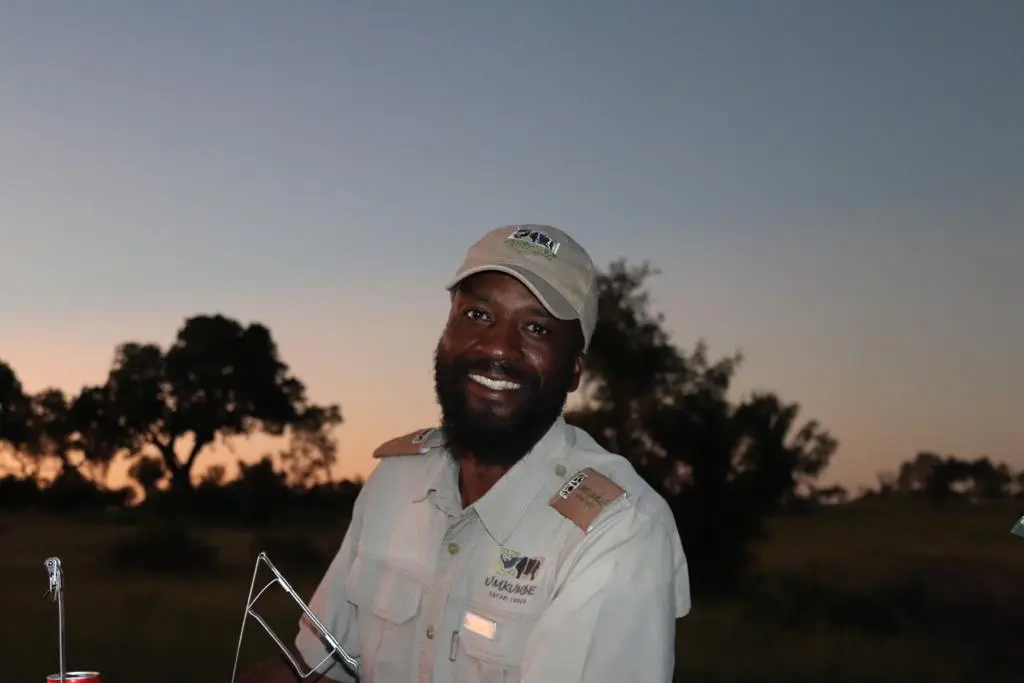
For many safari guests, the magic lies in the sighting of something such as a leopard draped over a marula branch or a herd of elephants crossing the road. But behind many of these moments is a quieter, deeply skilled art: tracking. At Umkumbe Safari Lodge, tracker Mashaba brings this ancient practice to life, guiding guests not just to animals, but into a deeper understanding of the bush itself.
A passion rooted in the wild
Mashaba’s journey into tracking began with a simple but powerful connection to nature. Growing up, visits to wild areas such as the iconic Kruger National Park sparked a lasting curiosity about wildlife and their behaviour. Time spent in these environments shaped his path, turning fascination into purpose.
Determined to learn, he immersed himself in the knowledge of experienced trackers. By observing animals and later studying their tracks once they had moved on, he began to decode the subtle language of the bush. Over time, these lessons built into an intuitive understanding of how animals move, behave, and interact with their surroundings.
Reading the story beneath your feet
Tracking is often described as storytelling in the sand. For Mashaba, every mark on the ground carries meaning. A fresh track on the road is never just a footprint; it reveals direction, pace, or even behaviour.
Was the animal walking calmly or running with urgency? Did it pause, change direction, or interact with its environment? These details guide each decision, turning a simple spoor into a trail worth following.
The challenge and reward of tracking leopards
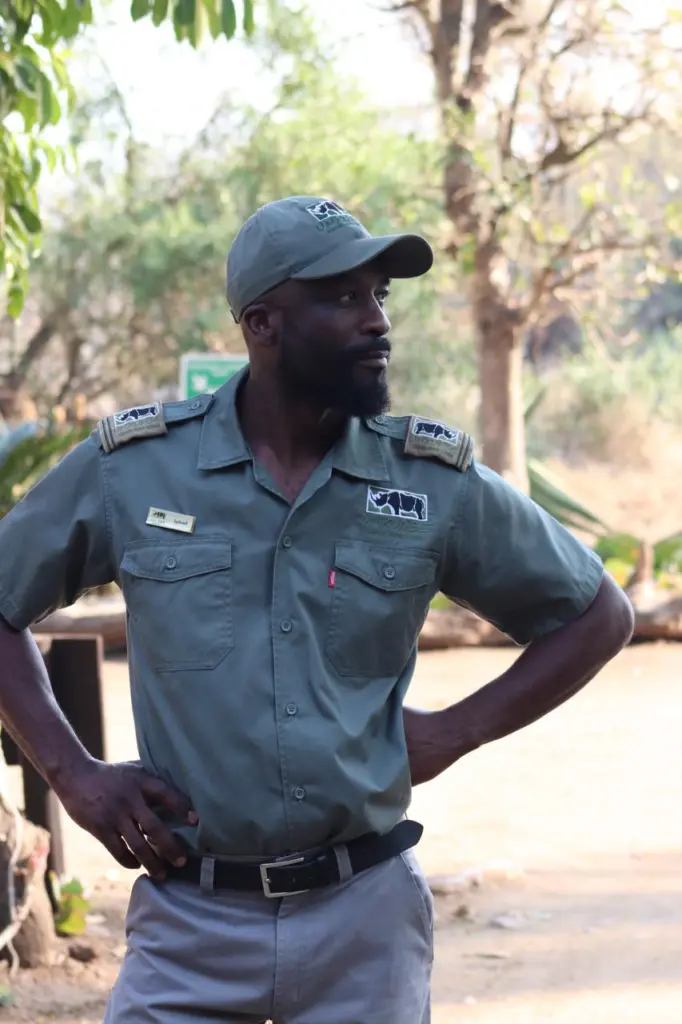
Among the most thrilling animals to track is the elusive leopard. Solitary and highly adaptable, leopards rely on stealth and camouflage, making them both difficult to find and incredibly rewarding to follow.
For many safari-goers, spotting a leopard is a highlight, and often it begins with a single set of tracks. By studying spoor closely, Mashaba can interpret not only where the leopard is heading, but what it may have been doing along the way.
One particularly memorable experience began with drag marks in the sand, a clear sign of a kill. Following this clue, Mashaba tracked the leopard to its prize, creating a moment that would stay with him and his guests long after the sighting.
The subtle difference in the sand
Not all tracks are easy to interpret. Some require a trained eye and years of experience. For example, distinguishing between a cheetah and a leopard can be deceptively tricky.
Cheetahs, unlike leopards, have non-retractable claws, meaning their tracks often show visible claw marks. Leopards, with retractable claws, typically leave a cleaner, clawless print. It’s a smaller detail, but one that can change the entire direction of a tracking effort.
The rarest trails to follow
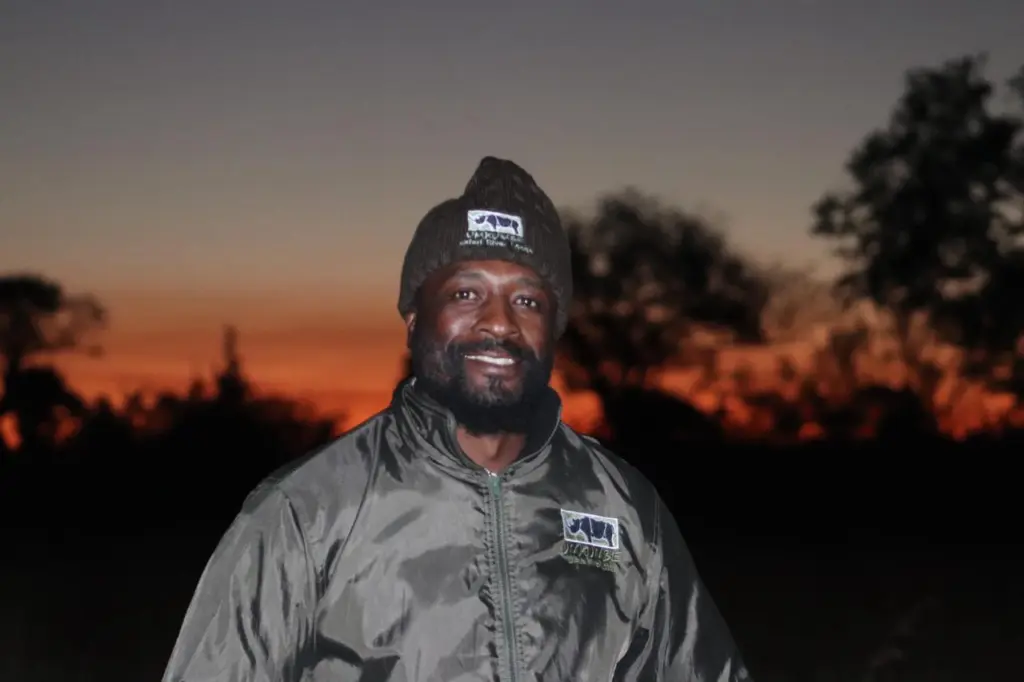
Even for seasoned trackers, some animals remain a true challenge. The elusive aardvark and the highly selective pangolin are rarely seen, moving quietly through the bush and leaving behind faint, easily missed signs. Tracking them requires patience and a measure of luck.
When nature shapes the track
The environment plays a crucial role in how tracks are formed and followed. Seasonal changes bring different conditions, each influencing visibility in its own way.
In summer, rainfall softens the ground, allowing tracks to sink deeper and become easier to identify. In winter, dry and dusty conditions create crisp, defined prints that can be followed with precision. For trackers like Mashaba, adapting to these changes is part of the daily rhythm of the bush.
More than a skill, A lifelong calling
For Mashaba, tracking is not just about finding animals; it’s about continuous learning and connection. Each day offers a new puzzle, a new story waiting to be uncovered in the sand. Equally important is the opportunity to share this knowledge with guests from around the world. Through tracking, visitors gain a deeper appreciation for the intricacies of the natural world, understanding that every sighting is part of a much larger narrative.
In the end, tracking transforms a safari from a series of sightings into a meaningful journey. It reveals the hidden layers of the bush and reminds us that, long before we see an animal, its story has already been written, right beneath our feet.