
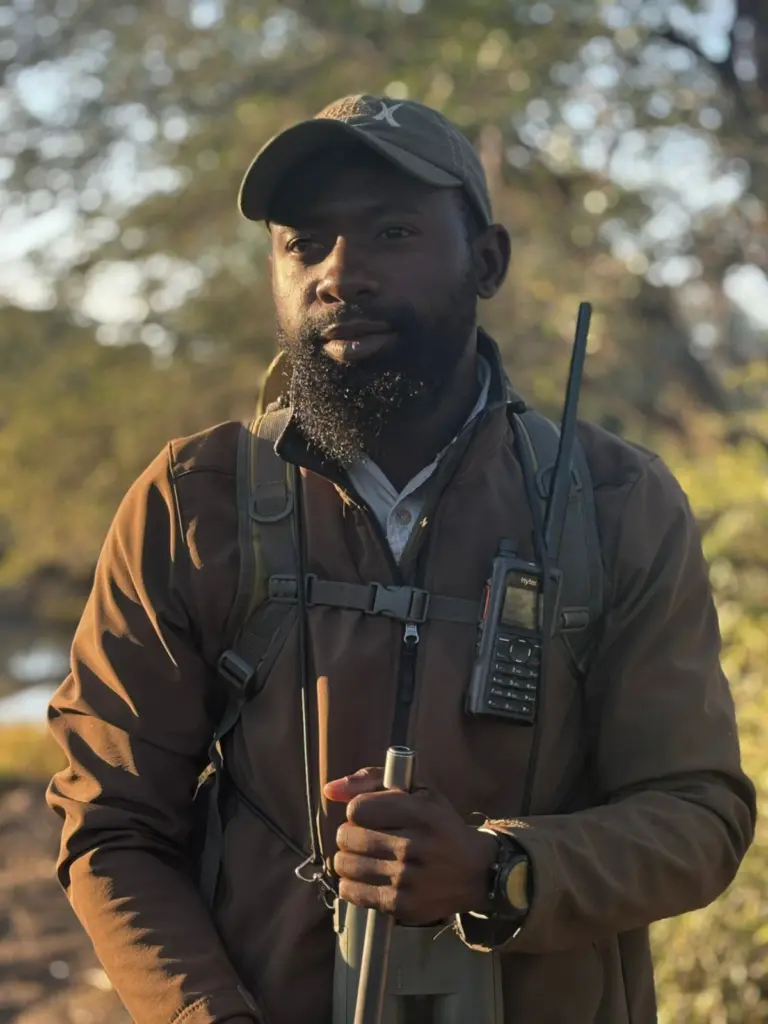
There is a quiet confidence that comes from time spent in the wilderness, an awareness shaped by observation, patience, and respect. For Ntwanano Baloyi, a guide at Africa on Foot in the Klaserie Private Nature Reserve, guiding is not simply a profession; it is a way of interpreting the natural world and sharing that understanding with others.
From the moment guests arrive, his focus is clear: to connect people with the wilderness in a meaningful way. “I love sharing the beauty of nature with people and helping them understand wildlife,” he explains. “Seeing guests become excited about animals and learning something new is incredibly fulfilling.” Four years into his guiding career, that sense of purpose remains at the heart of every drive and walk.
Reading the language of the bush
Tracking is where Ntwanano’s story begins. Long before formal training, he learned to read the land as a young boy in his village, following cattle across the terrain. “If I lost a cow, I couldn’t go home,” he recalls. That early responsibility shaped a skillset rooted in necessity, one that has since evolved into a refined craft.
Today, he interprets the smallest details with precision: the sharpness of a track’s edge, the overlay of bird prints, the spacing between footsteps, or the subtle disturbance of grass. Each sign reveals a narrative: how an animal passed, how it moved, and even what it may have been doing.
“Tracking means understanding nature, being patient, and connecting with the environment,” he says. “It’s both a skill and a passion.”
Encounters that stay with you
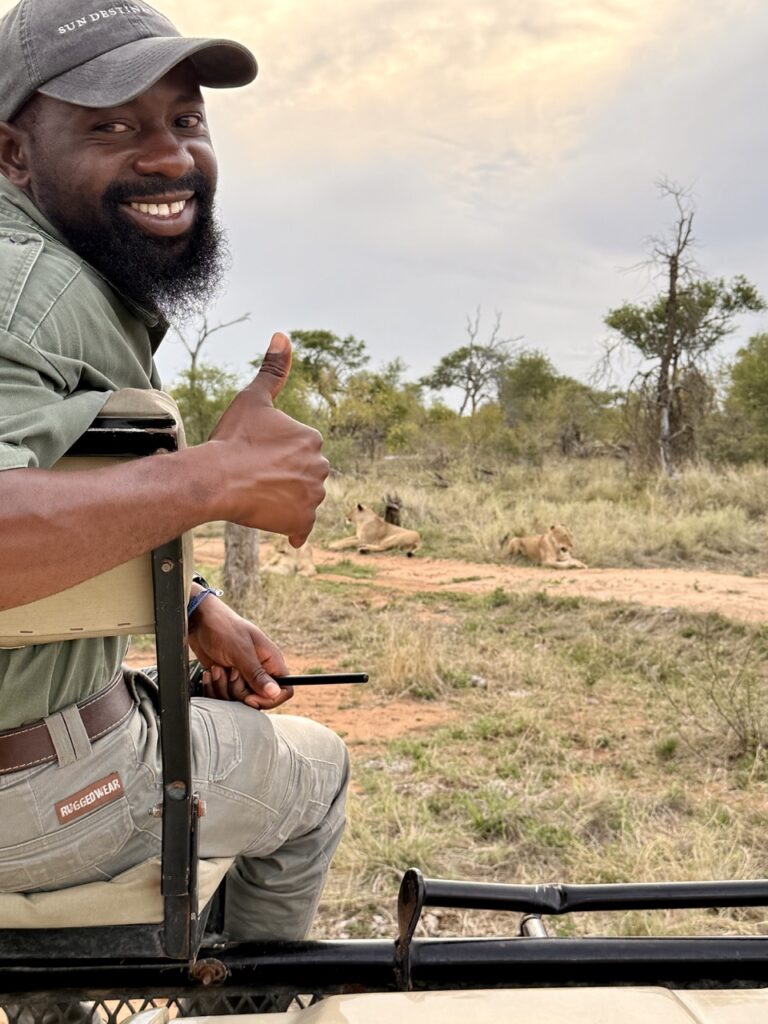
Some moments in the bush leave a lasting imprint. For Ntwanano, one of the most unforgettable was witnessing a pride of lions hunting a giraffe at sunset, an intense display of coordination, strength, and instinct.
Yet not all memorable sightings are dramatic. He recalls tracking a white rhino for hours, following only mud droplets and faint signs after it wallowed. The trail eventually led to the animal resting quietly, revealed by the help of oxpeckers calling overhead. “It was difficult tracking,” he says, “but rewarding to see my skills pay off.”
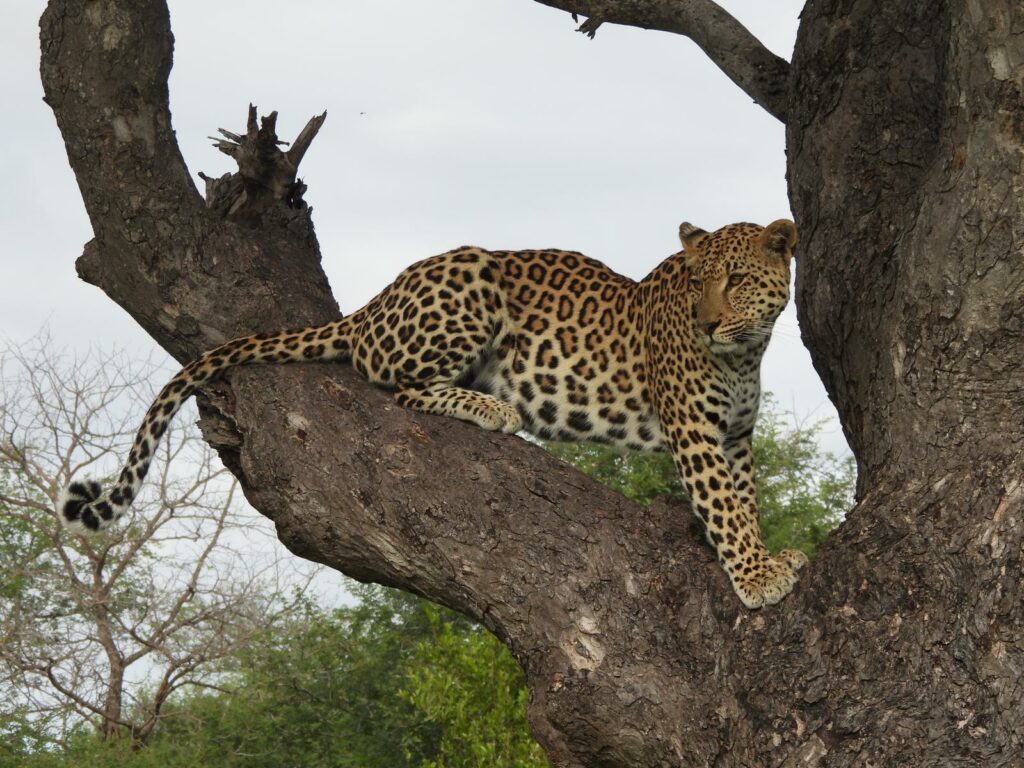
Even unexpected outcomes carry their own magic. On one occasion, following a rhino track led instead to a leopard resting in a tree: a reminder that in the wild, certainty is rare, and discovery often comes unannounced.
A deep respect for wildlife
At the centre of Ntwanano’s guiding philosophy is respect. His favourite animal, the African elephant, reflects this balance of power and sensitivity. He is drawn to their intelligence and social complexity, as well as their ability to communicate through behaviour. “You can read them,” he explains, “and understand what they’re doing.”
This awareness leads to every aspect of his work. Guiding, to him, is about more than finding animals; it is about educating guests, protecting ecosystems, and ensuring that every encounter takes place on nature’s terms.
“The wilderness is unpredictable,” he says. “We are visitors in the animals’ home.”
The subtle details that matter
While safari guests are often captivated by large mammals, Ntwanano pays equal attention to the finer details, such as the alarm calls of birds and monkeys, the presence of insects, or the faint imprint of a track. These elements form a broader ecological story, and one that reveals movement, interaction, and balance within the environment.
The season also plays a role. In autumn, for example, thinning vegetation improves visibility, and animals tend to concentrate around water sources, subtly shifting the rhythm of a safari.
For those hoping to capture these moments, his advice is straightforward: work with natural light, remain patient, and focus on the animal’s eyes, where behaviour and emotion are most clearly expressed.
A life shaped by purpose
Ntwanano’s journey into guiding was solidified through an opportunity at NJ MORE Field Guide College under the Timbavati Foundation. “I realised I could make a difference,” he says. “This is where I’m meant to be.”
This sense of responsibility extends beyond daily guiding. Protecting wilderness areas, he believes, is essential, not just for ecological balance, but to ensure future generations can experience the same connection to wildlife.
In every track, sound, and sighting, Ntwanano reveals a deeper layer of the wilderness, one that rewards patience, sharpens awareness, and fosters respect. To walk or drive alongside him is to see the bush not just as a landscape, but as a living, unfolding story.