
When you think of a safari guide or tracker, you might picture someone scanning the bush for a lion, following fresh tracks through the sand or pointing out an animal hidden among the trees. Wildlife is certainly part of the experience. But a guide or tracker’s role extends far beyond locating animals.
Every game drive and walking safari is an opportunity to observe, learn, and share information about the landscape. Through experience and close observation, guides and trackers develop an understanding of individual animals, their behaviour, movements, and the environment they inhabit.
At Sun Destinations, this knowledge helps us create meaningful safari experiences while encouraging a deeper appreciation for the wild spaces and wildlife we must protect.
Reading the signs of the wild
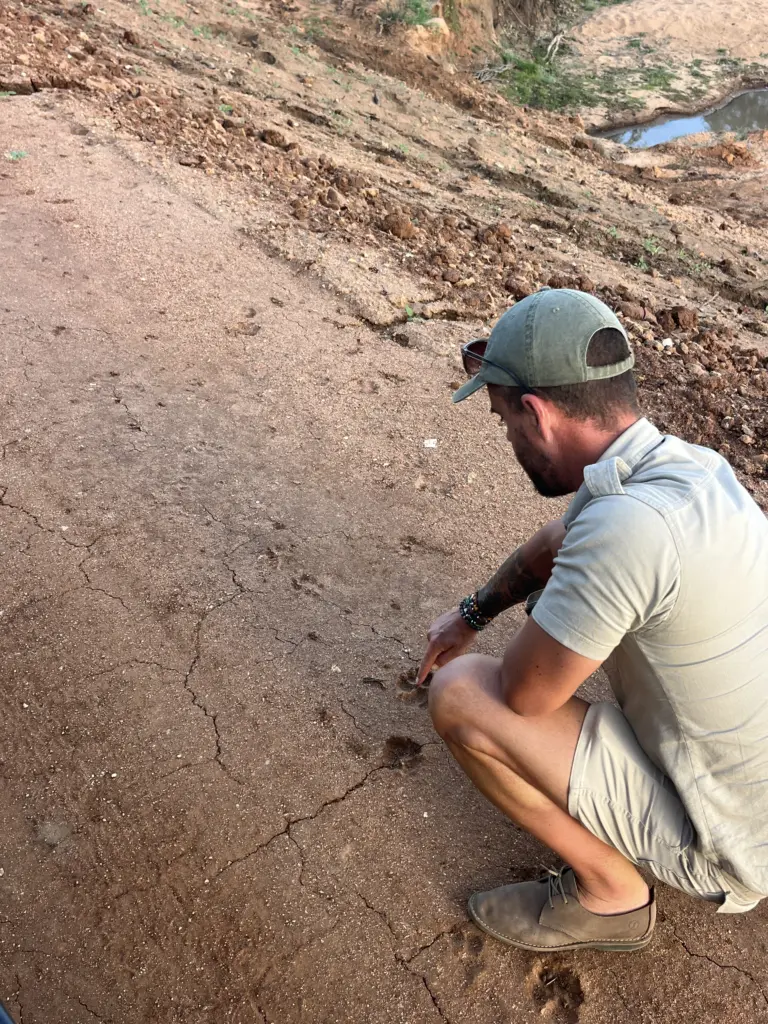
A safari landscape is constantly communicating with those who know how to read it. Tracks in the sand, broken branches, feeding signs, sounds, or even smells can reveal which animals have passed through an area and where they might be heading. A skilled tracker learns to interpret these clues, building a picture of what has happened in the bush long before an animal comes into view.
Tracking is not simply about finding an animal. It is about understanding the environment around you.
Trent, a guide at Chacma Bush Camp and Africa on Foot Wilderness Trails, explains that tracking helps guides understand which animals are in the area. By following their tracks, they can often work out where the animals are moving and potentially locate them.
Edward, also from Chacma and Africa on Foot Wilderness Trails, describes tracking as an art that goes beyond footprints.
“Tracking is an art of tracks, smell and sound, and the signs that animals leave behind. To be able to read the bush comes with experience in one area, where guests don’t spend time.”
The knowledge develops through spending time in the same landscape, recognising patterns and learning how different species move through their environment.
For guests, a set of tracks might be easy to overlook. For an experienced tracker, it could be the beginning of a much bigger story.
Understanding animal behaviour
Finding wildlife is only one part of a guide’s role. Understanding what an animal is communicating through its behaviour is equally important.
Animals respond to their surroundings in different ways. Changes in movement, feeding patterns, and body language can provide clues about how they are feeling. Recognising these signs helps guides assess a sighting and decide how best to approach it.
Trent explains that guides look for specific signs when animals feel stressed or threatened. One example is when an animal stops feeding, which can indicate that something in its environment has disturbed it.
Edward highlights the importance of recognising the signals different species display.
“Elephants shaking their heads and ears when you get too close, or an animal stopping what it was doing when you enter a sighting, are signs to look out for.”
These observations help guides make informed decisions about how to approach wildlife. Rather than focusing only on getting a better view, they must consider whether their presence is affecting the animal.
Over time, guides also become familiar with individual animals’ behaviour. This experience helps them recognise when an animal is comfortable with a vehicle nearby and when it needs more space.
Responsible wildlife viewing comes first
A close wildlife encounter can be one of the most memorable parts of a safari. However, responsible wildlife viewing means recognising that animals should never be pressured simply to create a better sighting.
Guides play an important role in setting boundaries, managing vehicle positioning and deciding when it is time to move away.
Trent explains that sightings cannot be forced. Animals must be given the space they deserve, and if an animal moves away because it feels threatened by a vehicle’s presence, the right decision is to leave the area.
Giving wildlife space reduces unnecessary pressure and allows animals to continue their natural behaviour. It can also contribute to better encounters in the future.
Edward shares a similar perspective, emphasising the importance of respecting an animal’s movements and switching off the vehicle engine when appropriate.
“Respect for an animal comes before a sighting for guests.”
This principle is central to responsible safari experiences. A guide’s role is not simply to help guests see wildlife, but to ensure that those encounters are approached with care and consideration. Sometimes, the most responsible decision is to keep your distance or leave a sighting altogether.
Learning from experience and other guides
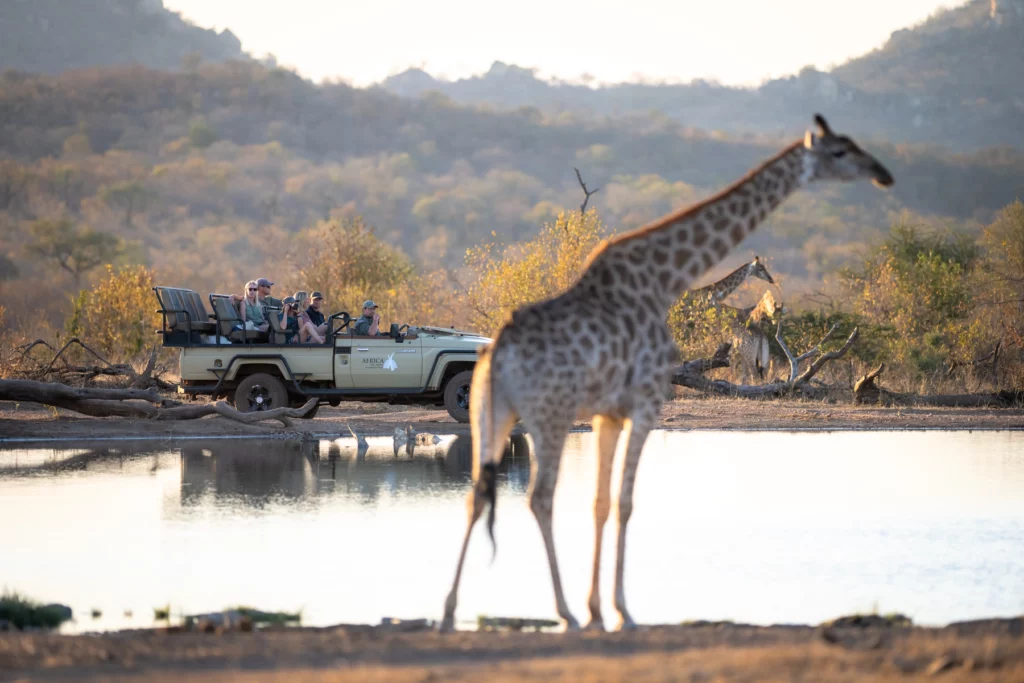
The knowledge that guides and trackers use in the field is built over time. It develops through repeated observation, practical experience, and learning from others who understand the landscape.
For Trent, walking safaris have been an important learning experience. When tracking elephants, for example, a trail may disappear as the animals move into thicker vegetation. Instead of giving up, a tracker can look for feeding signs, such as broken branches, to work out where the elephants have been and where they may have moved next.
This demonstrates an important part of wildlife tracking: the ability to interpret several signs together rather than relying on footprints alone.
Edward explains that experience also teaches guides how to approach different animals based on their individual behaviour.
“Over time, you start noticing changes and learning how to approach sightings based on the personality of the animal. Some animals might be comfortable with you getting closer, while others need more space. You learn this through experience.”

Observing change in the environment
Spending time in the bush allows guides and trackers to build a detailed understanding of their surroundings. They become familiar with wildlife movements, seasonal changes, and the subtle signs that indicate how animals are using the landscape.
This experience can help them notice when something changes, whether it is a shift in animal behaviour, a new movement pattern, or an unusual observation worth sharing with others.
Wildlife sightings and observations can also contribute to the broader knowledge of a reserve when they are recorded and communicated to the relevant teams. While guides and trackers are not necessarily responsible for formal conservation monitoring, their time in the field can provide useful information to support those efforts.
Their knowledge is particularly valuable because it comes from regular, direct contact with the environment. The more familiar they become with an area, the better equipped they are to recognise its patterns and notice when something appears different.
Why protecting wild spaces matters
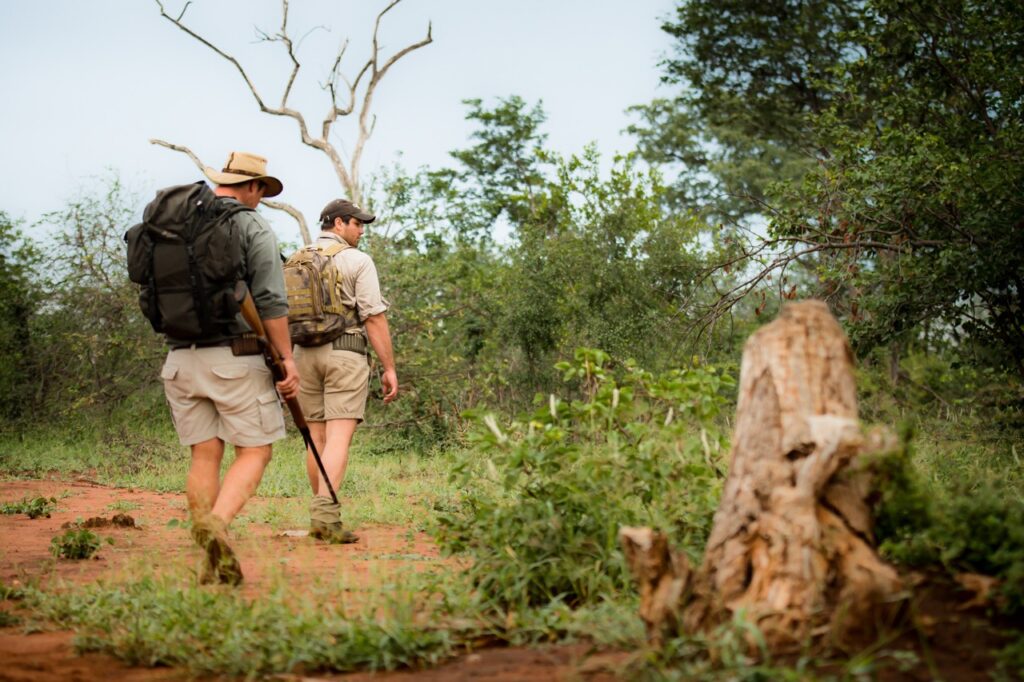
For guides and trackers, spending time in the bush offers a daily reminder of how important protected natural spaces are for wildlife.
Trent reflects on this connection, explaining that without these spaces, many animals would have nowhere to live and could face extinction. He also recognises that the continued protection of these areas supports the livelihoods of people who work in the safari industry.
His perspective highlights an important connection between conservation, wildlife and people.
Protecting natural habitats helps wildlife survive while supporting the people and communities whose lives are connected to these landscapes. Responsible tourism can play a role in sustaining this relationship by creating livelihoods linked to the continued protection of wild spaces.
Conservation is therefore not only about protecting individual species. It is also about safeguarding the environments they depend on and recognising the people who contribute to their care.
More than a sighting
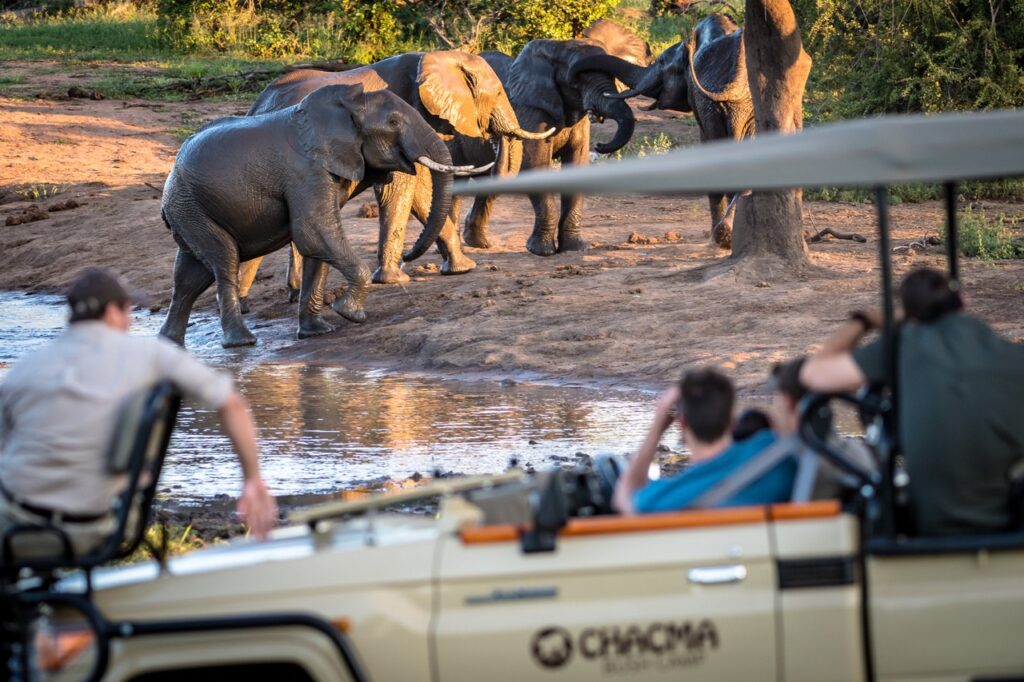
Conservation on safari involves many different people, from reserve management teams and researchers to local communities and tourism operators. Guides and trackers contribute through their daily observations, knowledge of wildlife, and decisions in the field.
As Trent and Edward’s insights demonstrate, tracking and guiding require patience, experience, and respect for the animals that share these landscapes.
A safari guide or tracker does more than help you find an animal. They help you understand the story of the bush, the needs of its wildlife, and why these natural spaces deserve to be protected.
At Sun Destinations, we believe that a deeper understanding of the wild helps create a deeper connection to Africa, and a greater appreciation for the importance of conserving it.