
What does sustainability on safari look like? A responsible safari camp considers the environment it operates in, the wildlife that calls the area home, the resources it uses, and the impact that guests can have on the surrounding ecosystem.
For travellers, this can make sustainability difficult to judge. What does a sustainable safari actually look like once you arrive at camp?
Across the Sun Destinations portfolio, sustainability takes many different forms. At Chacma Bush Camp in the Maseke Balule Game Reserve, this includes reducing unnecessary plastic, sourcing food locally, and carefully considering how guests interact with wildlife. At Africa on Foot Wilderness Trails, it means taking this approach even further by spending three days completely off-grid and travelling through the wilderness on foot.
At Umkumbe Safari Lodge in the Sabi Game Reserve, sustainability also extends beyond the lodge itself, with grey-water reuse, recycling, habitat restoration, responsible vehicle uses, and contributions to wildlife monitoring and research.
These examples show that sustainable safari camps don’t all look the same. Instead, sustainability often lies in everyday decisions made behind the scenes, as well as in the wider conservation work around them.
1. Energy: Reducing reliance on conventional power
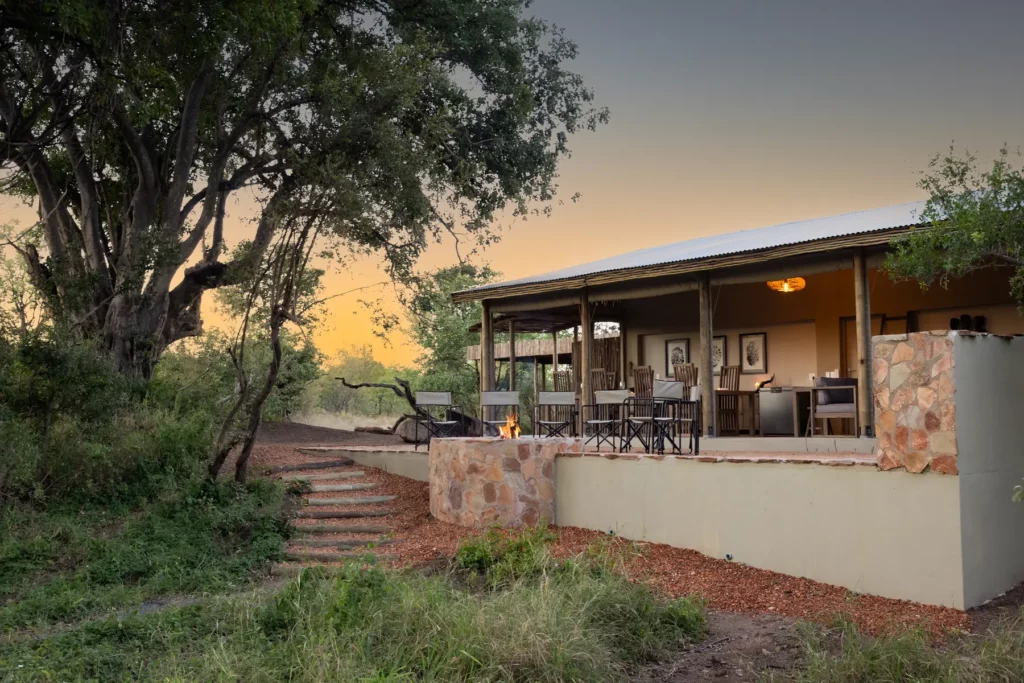
Energy is one of the most visible aspects of an eco-safari lodge. Many safari properties are situated far from towns and conventional infrastructure, making renewable energy a practical option as well as an environmental consideration. Solar power can be used to provide electricity for lighting and other essential needs, reducing reliance on conventional power sources.
Sun Destinations’ properties, such as Africa on Foot, nThambo Tree Camp, Nkuwa Wilderness Camp, Nyala Safari Lodge and Ngonyam Safari Lodge are all solar-powered.

2. Water: Managing a precious resource
Water is one of the most important resources at any safari camp, particularly in regions where rainfall is seasonal and natural water availability can fluctuate.
Sustainable water management can include reducing unnecessary consumption, using groundwater responsibly, and implementing systems such as grey-water recycling where appropriate.
At Chacma Bush Camp, guest bathrooms are supplied through a borehole system. The groundwater is naturally filtered underground before being drawn up for use at the camp.
At Umkumbe Safari Lodge, grey water from the laundry is reused to irrigate the lodge garden. This reduces the amount of additional water needed from the lodge’s borehole while allowing the garden to remain green and productive throughout the year.
3. Waste: Looking beyond the plastic water bottle
Reducing waste is not simply about recycling. It can also mean avoiding unnecessary packaging and finding alternatives to single-use items wherever practical.
At Chacma, this approach can be seen in some of the smallest details. Guest-room amenities are provided in glass bottles with wooden lids rather than plastic bottles. At mealtimes, sauces are served in ceramic bowls and salad dressings are decanted into glass bottles rather than being presented in their original plastic packaging. Salt and pepper are served in wooden bowls with locally handmade wooden spoons, while plastic straws are not stocked. If a guest requests a straw, glass alternatives are available.
Africa on Foot Wilderness Trails follows the same principle. Rather than providing disposable plastic water bottles, guests receive a reusable stainless-steel bottle that can be refilled throughout the trail. Traditional metal plates, bowls, and mugs are used at the off-grid campsite instead of disposable alternatives.
At Umkumbe Safari Lodge, waste management includes a recycling system for plastic, glass, and tins generated by the bar, as well as cardboard.
4. Local sourcing: Sustainability can support local communities
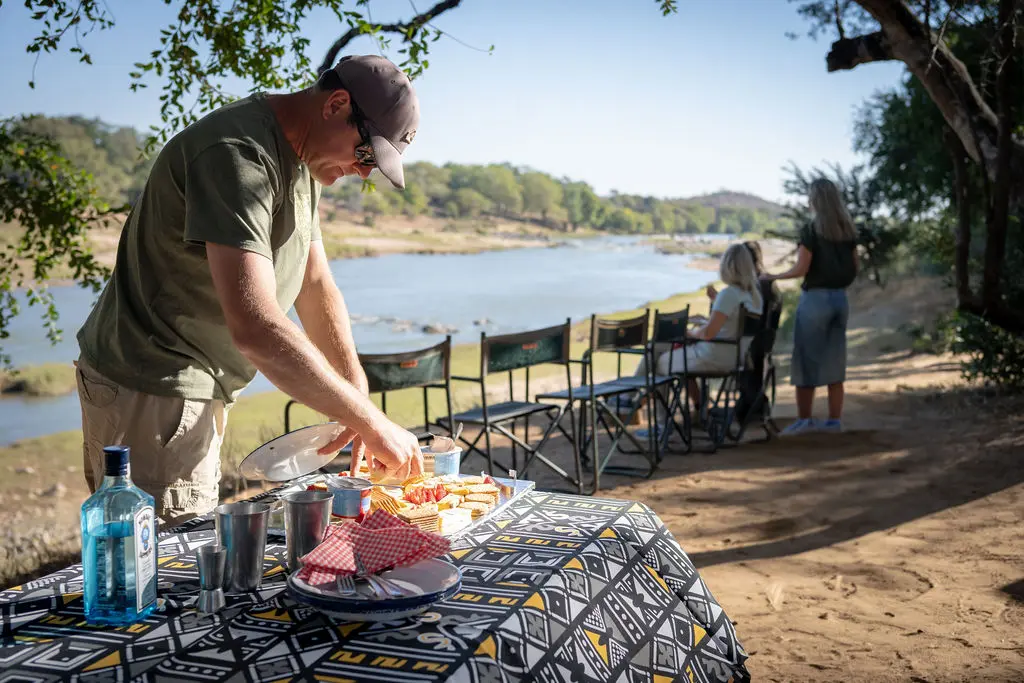
Responsible safari is not only about reducing environmental impact. When a camp sources its food, products and services can also make a difference.
Chacma sources fresh oranges directly from local citrus farmers in the Hoedspruit area. The fruit is freshly squeezed and served as orange juice, including during breakfast on morning game drives. Choosing local produce can help support nearby farmers and businesses while reducing the need for some packaged, transported alternatives. It can also give guests a more direct connection to the region they are visiting.
The same philosophy extends to the camp’s curio shop, where locally made jewellery and other handmade products are available. One particularly meaningful example is jewellery made from snares recovered from the bush. The products are sourced through a local company, with proceeds supporting anti-poaching efforts. Purchasing locally made products can therefore become another way for guests to take a piece of their safari home while supporting conservation awareness.

5. Sustainable design: Working with the environment
A sustainable safari camp does not necessarily need to look completely different from a conventional lodge. Instead, sustainable design is often about considering the environment in which a property is built and minimising disruption.
This can include making use of existing landscapes, limiting unnecessary infrastructure, reducing energy requirements and designing accommodation that works with the surrounding environment rather than trying to transform it.
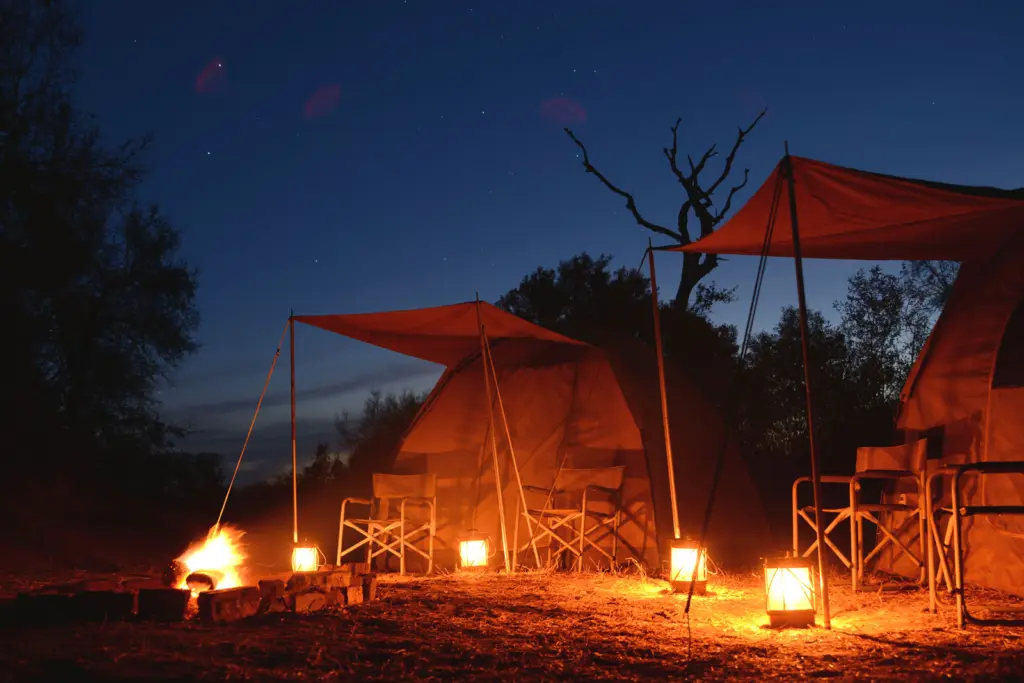
The principle is particularly evident on a walking safari. Africa on Foot Wilderness Trails establishes a new campsite each night, allowing guests to experience the wilderness without a permanent lodge infrastructure following them through the reserve.
The experience is deliberately simple: tents, open-fire cooking, lanterns and the surrounding bush.
6. Managing the impact of safari vehicles
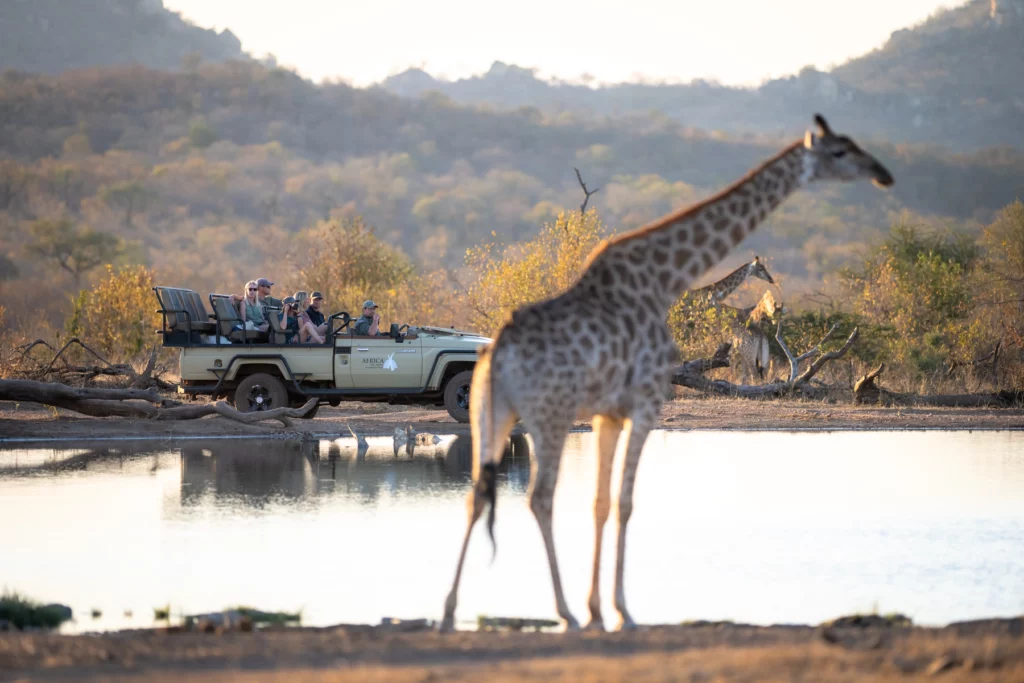
Game drives are an essential part of the safari experience, but vehicles can have an impact on the environment, particularly when travelling off-road.
At Umkumbe Safari Lodge, the number of vehicles permitted to go out on game drives is limited. This helps reduce the number of vehicles travelling through the reserve and limits some of the environmental impact associated with off-road driving.
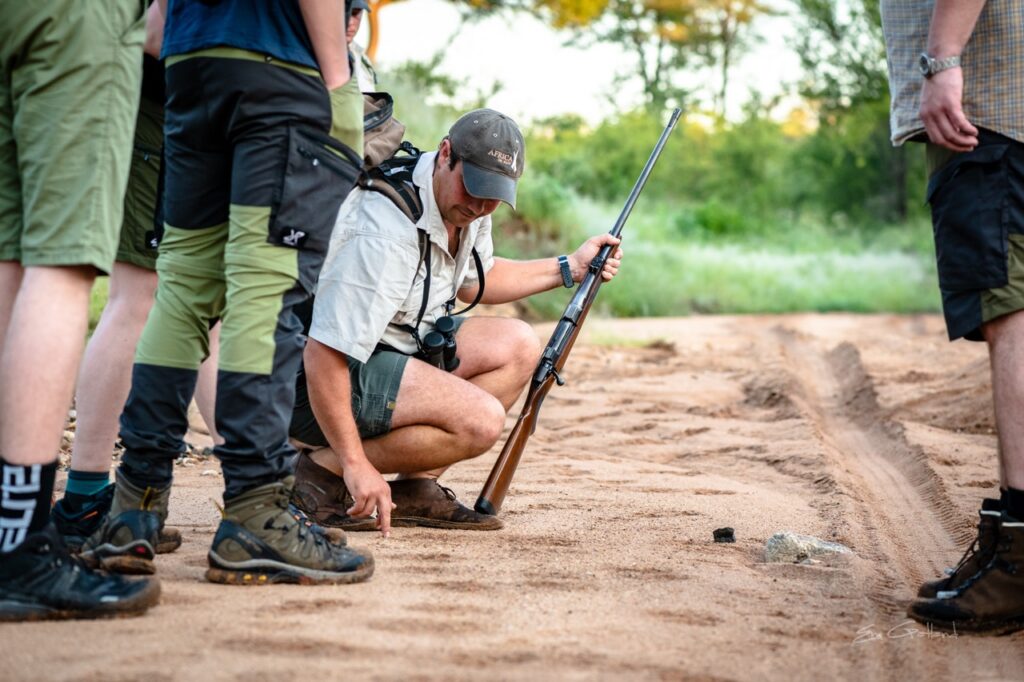
Where off-road driving has caused visible disturbance to the ground, guides help rehabilitate affected areas by brushing over the vehicle tracks with branches. Covering these “two-tracks” helps protect exposed soil and new grass growth from further disturbance by vehicles and animals, as well as from the harsh sun.
7. Wildlife: Responsible safari means more than seeing animals
Perhaps the most important part of a sustainable safari is how the camp and its guests interact with wildlife.
At Chacma, guides record wildlife sightings after each morning and afternoon game drive. These records help with understanding animal movements and behaviour, as well as identifying areas where guests should avoid creating unnecessary disturbance.
Guests are also encouraged not to pick up smaller creatures such as chameleons and tortoises simply to get a closer look or a better photograph. Even seemingly harmless interactions can interfere with an animal’s natural behaviour.
8. Wildlife monitoring and research
Responsible safari operations can also contribute to a better understanding of the wildlife that lives within a reserve.
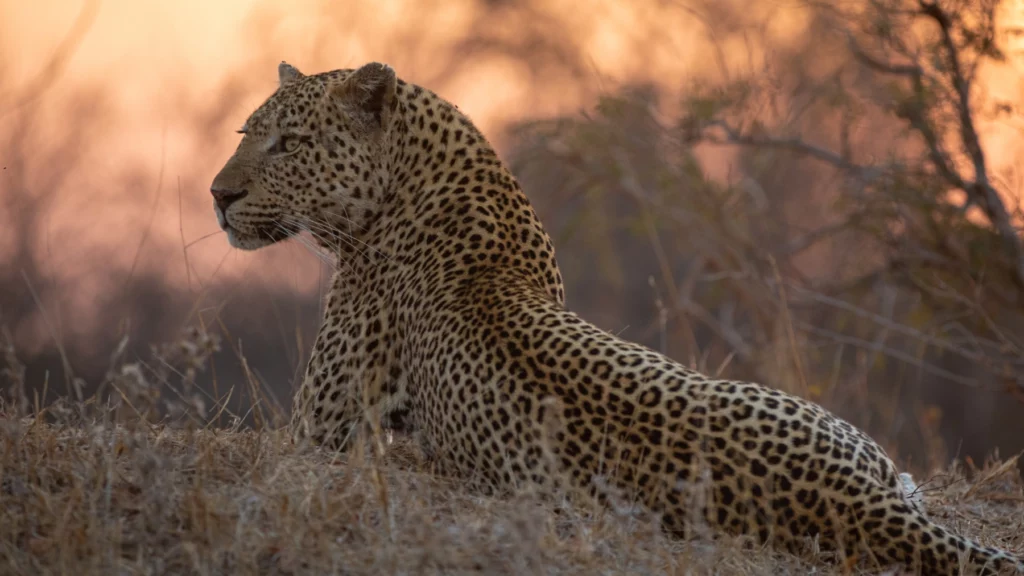
At Umkumbe Safari Lodge, guides report sightings of large and mesocarnivores to Panthera, a non-profit organisation that conducts international wild-cat conservation and research. The information contributes to research into predator movements and estimated population sizes, including the organisation’s long-running leopard research in the Sabi Sand.
The organisation also logs specific wildlife sightings on the EarthRanger platform and reports them to reserve management. These records can include endangered species, large and mesocarnivores, selected endangered bird species and nesting sites, mortalities, alien plant sightings and trees damaged by elephants.
At Chacma, guests also report endangered species sightings to reserve management for monitoring and protection. Wildlife monitoring therefore becomes another way in which a safari experience can contribute to conservation. A game drive is not only an opportunity for guests to see an animal; the information gathered during that drive can also form part of a much wider picture of the reserve’s ecosystem.
9. Protecting wildlife through responsible viewing
There are times when responsible safari means accepting that an animal should not be approached.
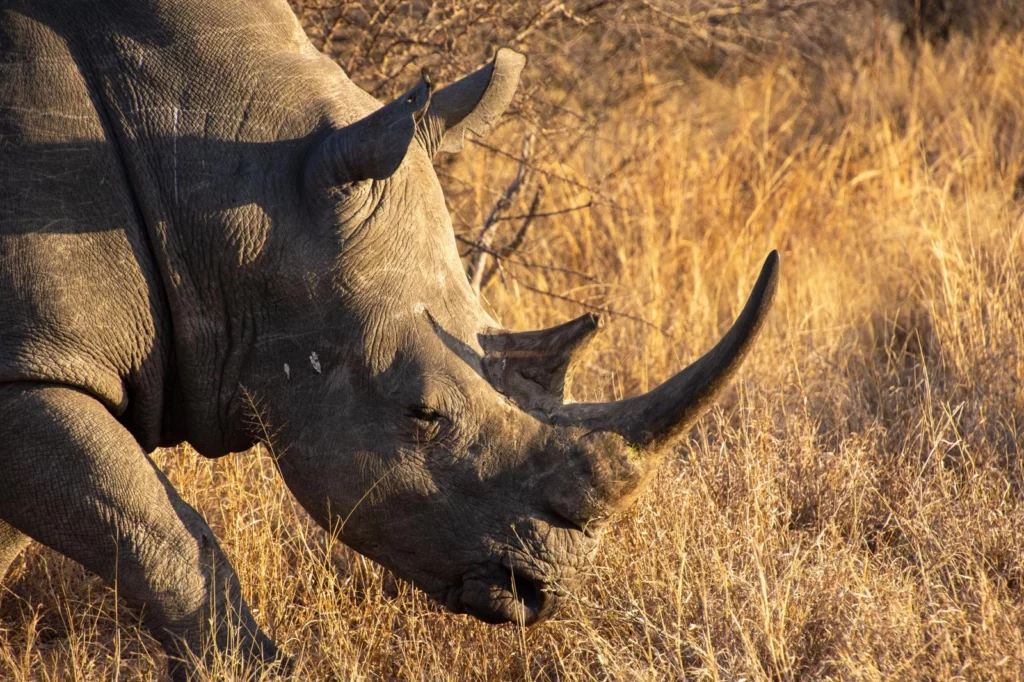
At Chacma, guests are asked not to tag the lodge or reserves when sharing rhino photographs or videos, and they are encouraged to put their phones on flight mode during game drives. This helps prevent location data from unintentionally revealing where rhinos have been seen.
If rhinos are spotted close to a fence line where they could be visible to people outside the reserve, the appropriate reserve personnel are alerted so that the anti-poaching team can respond.
Guests are thus encouraged to leave animals where they are rather than handling them for photographs or closer viewing.
These measures highlight an important point about responsible safari: sometimes the most sustainable thing a guest can do is not share a sighting. A memorable wildlife encounter does not have to become a public location pin.
10. Conservation beyond the lodge
A safari camp operates within a much larger ecosystem, and many conservation initiatives take place at reserve level rather than at an individual lodge.
In the Sabi, conservation work includes wildlife monitoring through tools and methods such as EarthRanger records, camera-trap surveys, individual animal identification, and game counts.
Fire management is another important part of maintaining a healthy savanna ecosystem. At the reserve, biomass readings are used to determine whether particular areas require controlled burning. Selected areas are burned on a rotational basis to remove old vegetation, cycle nutrients, and encourage new growth, while firebreaks can help slow the spread of larger wildfires.
Rhino conservation is another major focus. The reserve has an ongoing rhino dehorning programme intended to reduce the attractiveness of rhino horn to poachers.
The Sabi Sand has also participated in rhino reintroduction efforts in partnership with organisations including the Greater Kruger Environmental Protection Foundation (GKEPF) and African Parks. These releases form part of wider efforts to return rhinos to protected natural habitats.
Conservation successes are often the result of many organisations, reserve teams, anti-poaching units, technology, local communities and individual staff working together. They should therefore be understood as collective efforts rather than the achievement of one lodge alone.
At Sun Destinations’ properties, we are committed to respecting the environment and the wildlife that lives within it.