
Often, when people think of safaris, their first immediate thought is that it’s about searching for wildlife. Whether it is the thrill of spotting a lion or the quiet awe of watching elephants at a waterhole. But what truly defines the safari experience is not just what you see, but how you see it.
The heart of every unforgettable safari is a guide. A guide is not just someone who shows you the wilderness but someone who helps you understand it, feel it and connect with it in a way that lingers long after you have left.
As Ntwanano, a guide at Africa on Foot, explains, “Guiding means educating, protecting nature and creating unforgettable experiences for guests and myself while respecting wildlife.”
Guides help you to see beyond the obvious
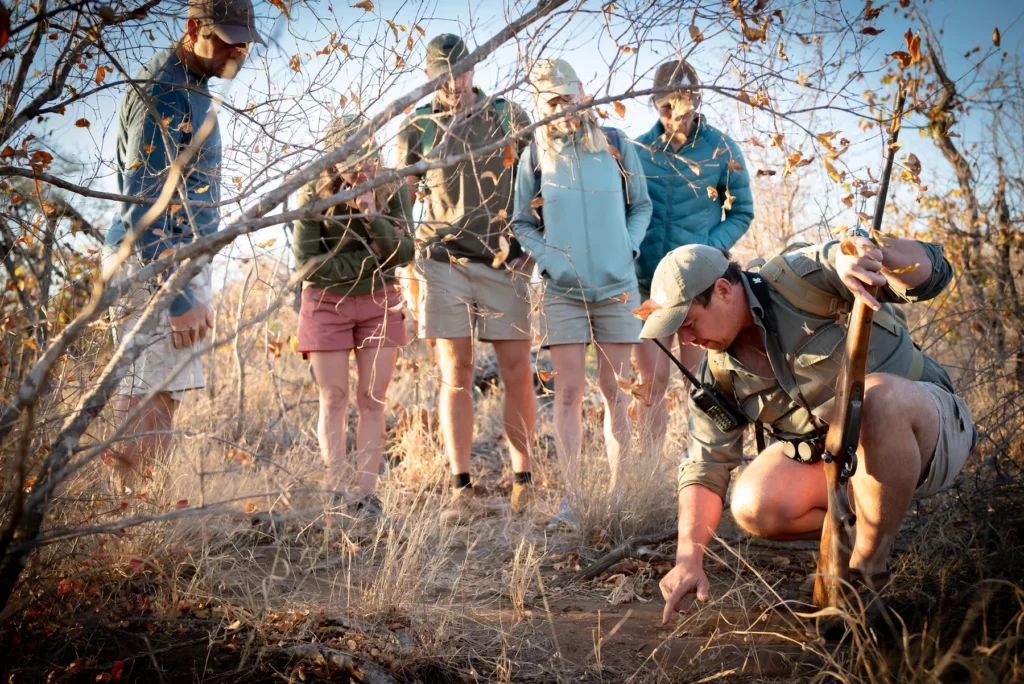
While many guests arrive hoping to see iconic animals such as big cats or elephants, the true magic of the bush often lies in the details.
Guides are masters of picking up the clues around them. Whether it might be a set of tracks crossing the road, the alarm call of a bird, or the quiet movement of insects beneath your feet, these clues tell a deeper story, one that skilled guides know how to read.
As Ntwanano shares, “Guests usually miss small details like insects, bird calls and tracks that tell a bigger story about what is happening in the bush.”
This is where a safari transforms from a simple drive into a living narrative.
Turning sightings into stories
Pointing out an animal that is out in the open is easy, but great guides do something more, they turn sightings into stories.
The guides read behaviour, anticipate movement and translate what is happening in real time into something meaningful and memorable.
As Royden, a guide at Africa on Foot, puts it, “Being able to communicate well with guests and turn a sighting into a story by reading behaviour…creates an image in the mind that will have a lasting impact.”
Through this, suddenly, a lion is no longer just resting; it is conserving energy for a hunt. A herd of elephants is not just passing by; it is a family, with each member playing a specific role.
More than a checklist
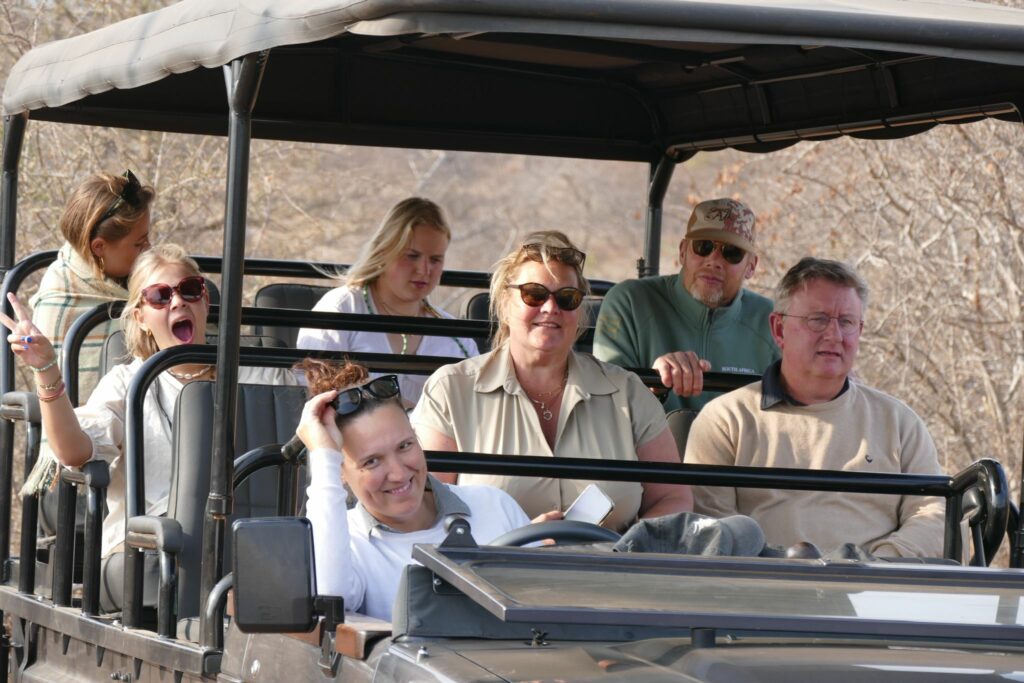
The best safari experiences take place when you are not rushing. It is about more than just ticking off the Big Five. It is about slowing down and immersing yourself in the rhythm of the bush.
At Chacma Bush Camp, guide Edward explains it perfectly: “Taking guests on safari should be more like a journey through nature and not just a checklist.”
This journey might include stopping for a bird, examining tracks in the sand, or simply sitting in silence as the sun sets. These are the moments that prove to be memorable.
Making the most of the small things
The part of the safari that many guests find surprising is discovering how fascinating the “small things” can be.
As Ruan, a guide at Chacma Bush Camp, shares: “A great safari guide…doesn’t just focus on racing from sighting to sighting…but also stopping for the small things like birds, plants, dung, insects and tracks.”
This proves to be an educational and fascinating moment for guests. As Ruan explains further, “And often, guests don’t even realise how much they’ll enjoy these moments until they’re shown.”
The safari connection
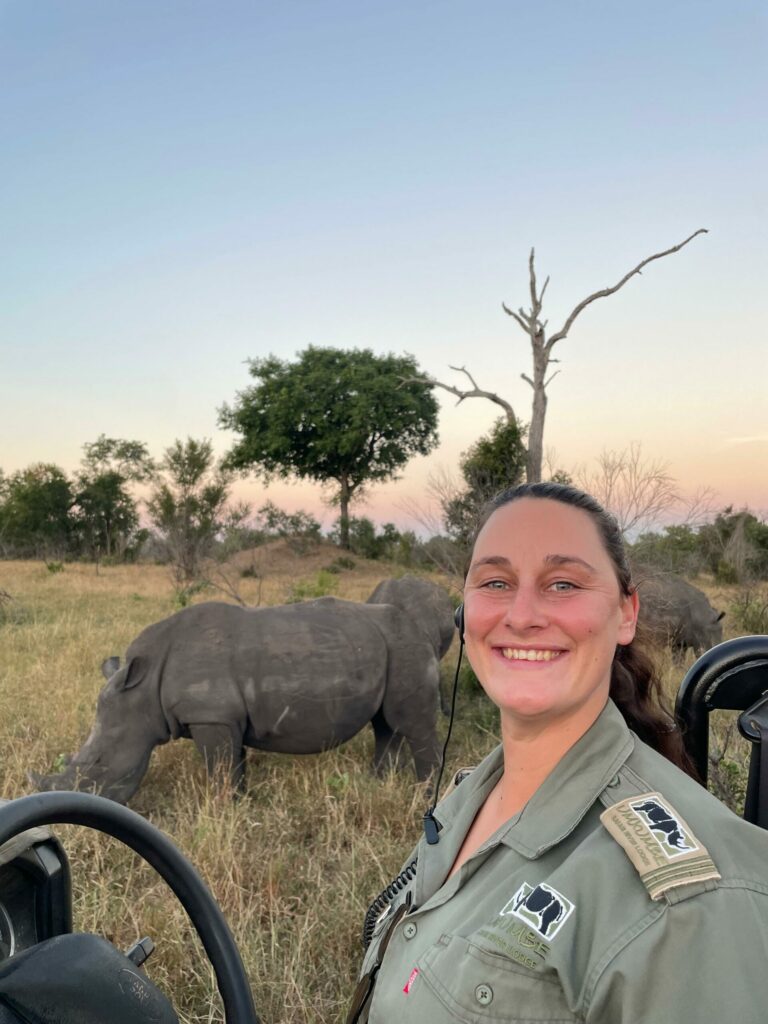
Beyond knowledge and tracking, guiding is a deeply human experience. It is about connection, connection between people, and between people and nature.
Shannon, a guide at Umkumbe Safari Lodge, explains it beautifully: “It’s not just about showing guests animals; it’s about drawing them into the environment as a whole…We don’t just collect sightings or photographs; we feel something deeper.”
The deeper feeling is what makes a safari unforgettable.
Speaking the language of the wilderness
Every guide experiences the bush differently, and part of their role is to share that unique perspective.
As Julian, a guide from nThambo Tree Camp, explains: “Guiding is interpreting…through my eyes, my ears, and my nose…trying to explain the animal behaviour…the sounds that I hear…and the relationships between different animals.”
It is this interpretation that brings the wilderness to life in a way that no book or documentary ever could.
What makes it special
A great safari does not end when the game drive is over. It stays with you: in the stories you tell, the memories you revisit, and the way you see nature in the future.
Because in the end, it is not just about the animals that you saw, it is about the guide who helped you see them differently. And perhaps, helped you leave with a deeper appreciation for the wild than when you arrived.